AI will answer every question your kids ask. FIRST COG teaches them to question the answer.
FIRST COG teaches kids to think like computer scientists, without a computer. Question first, tools last, so AI becomes their tool, not their crutch. It's the approach backed by decades of research.
Kids were handed the screen before they understood the machine.
Tech went into classrooms because it was easy: easy to buy, easy to hand out, easy to show parents, easy to measure. Understanding is hard to show.
Study after study points the other way. Hands-on, unplugged learning builds stronger thinking, more confidence, and better coders later.
First Cog teaches the way the research says: unplugged, hands-on foundations first, then the tools. From the inside out.
If a computer science class starts on a computer, it's already starting off wrong.
The gap is getting wider every day. It's not too late. Catch up on the foundations, then get ahead with the tools.
A few of the biggest findings, each from a single review of many studies:
You won't see a certificate.
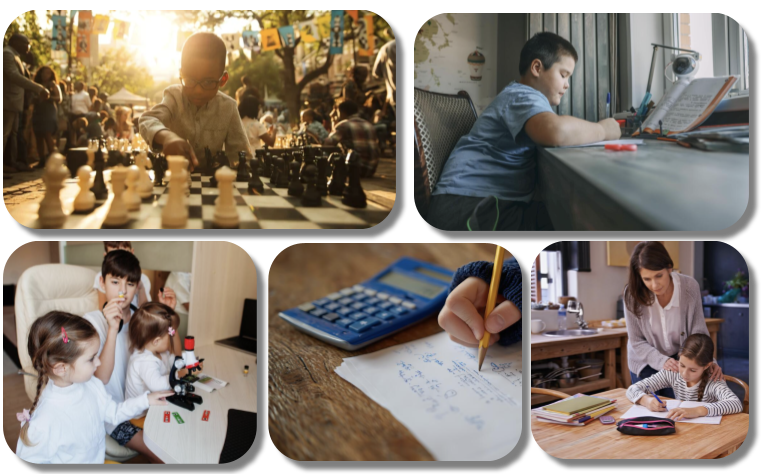
You'll see it everywhere else.
First Cog builds a habit, not a project. It shows up in math, in science labs, in essays, at the dinner table: wherever a kid meets a problem they haven't seen before and asks what it's really asking.
The first cog in any machine is the one that turns all the others. For us, that first cog is thinking.
Every First Cog lesson runs on the same five steps. Question first. Tools last.
- 01QuestionWhat is this really asking?
- 02StrategyWhat do I know? What do I need? What could I try?
- 03BuildModel it, sketch it, act it out.
- 04TestDoes it actually work? Failure is new information.
- 05Choose the toolCode? AI? A pencil? Nothing at all?
Test fails? That's not the end. It's new information. Back to step 02.
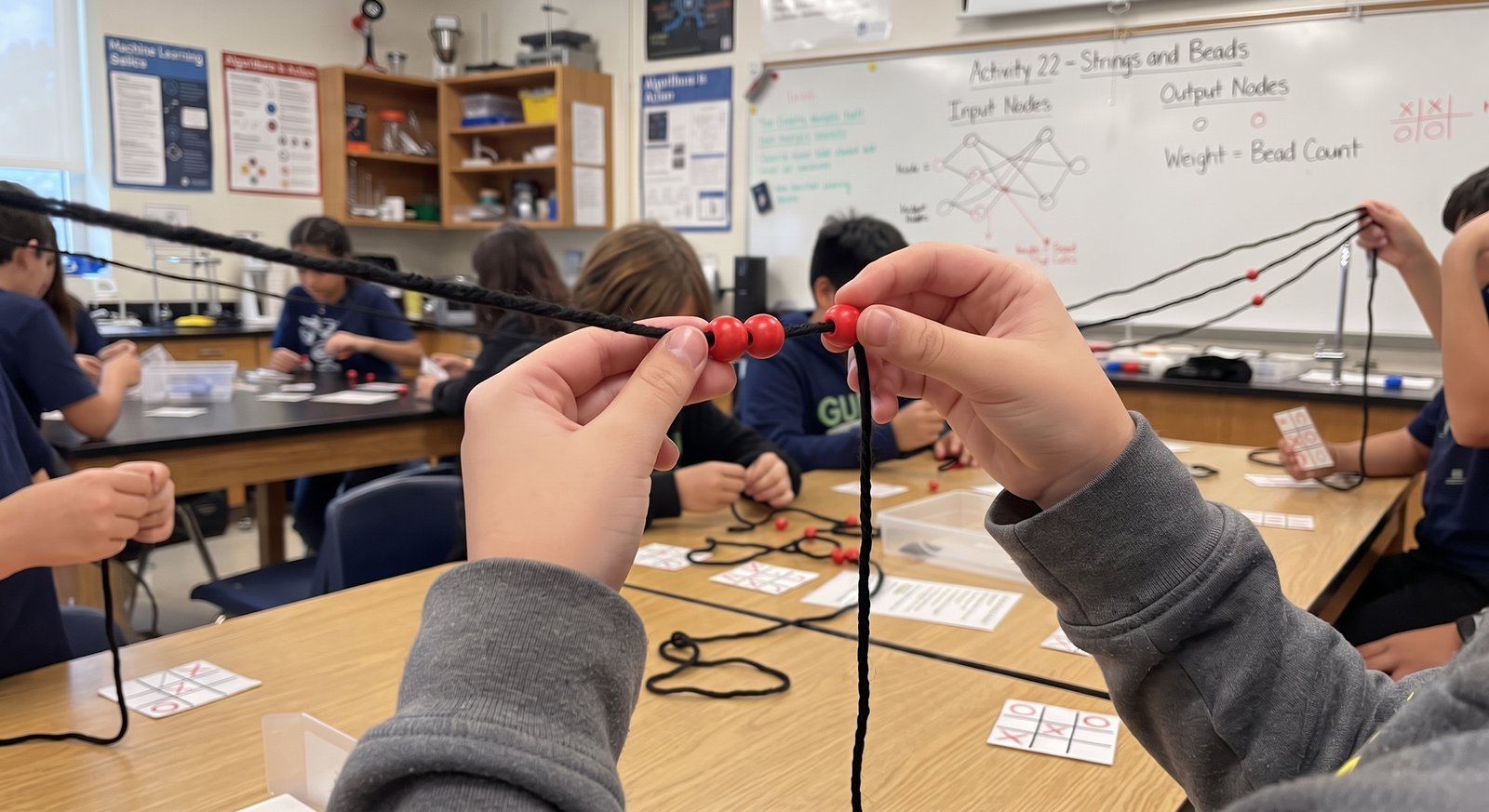
Build a Machine That Learns.
Kids become a neural network. Strings are the neurons. Beads are the memory. They train it, try to trick it, and figure out what it actually learned. It's the lesson most groups start with, and the tip of everything underneath.
One curriculum. Built around your school.
Teacher training
Professional development for teachers who want to run it themselves.
See details →Weekly program
The full curriculum, in sequence, during the school day.
See details →After-school club
A weekly club your families sign up for.
See details →Co-ops & microschools
A weekly computer science block built around your group.
See details →Sample lesson
75 minutes. The best way to see how I teach.
See details →It's not a coding class. It's the thinking every coding class skips. In-home sessions for families are also available, with limited spots.
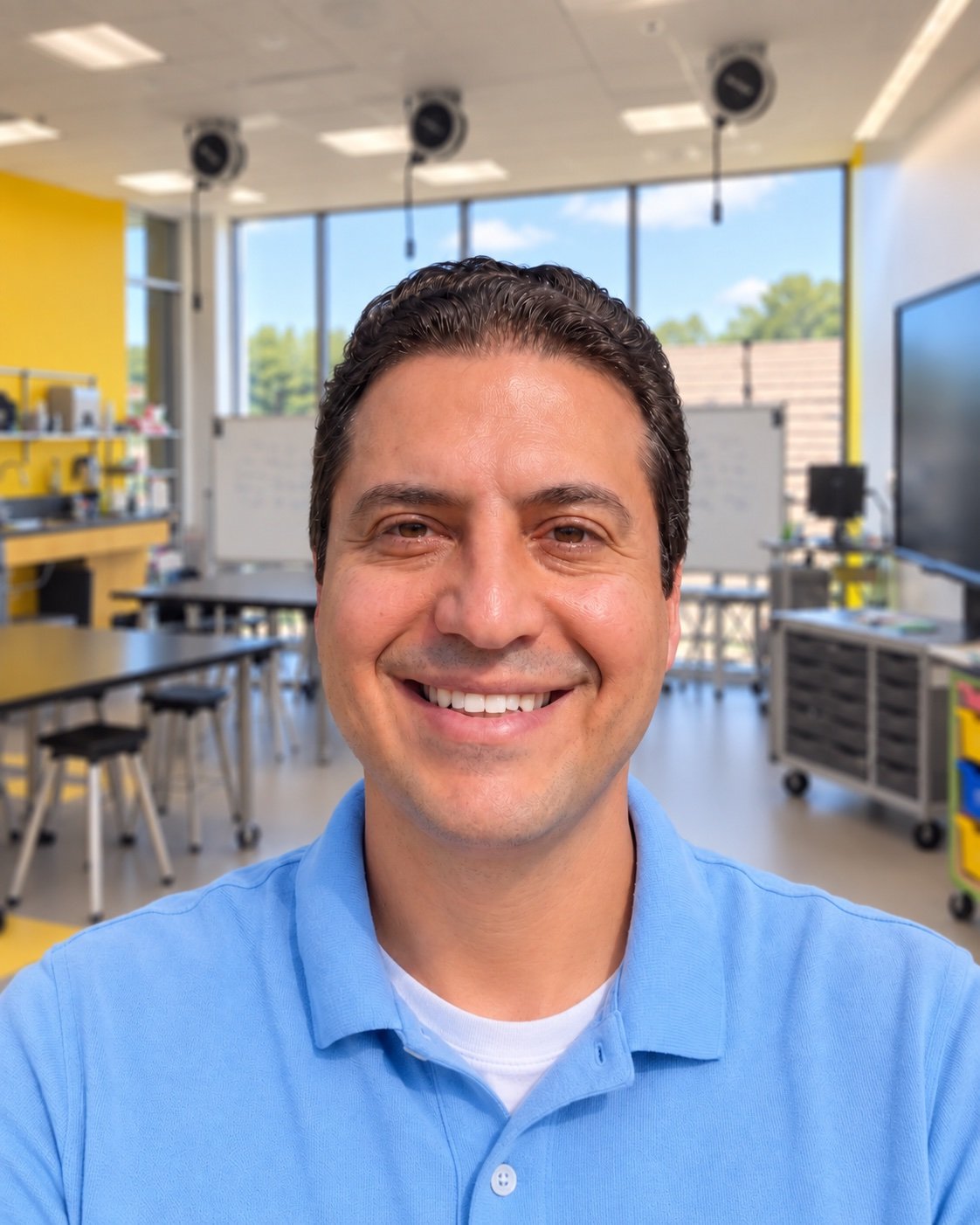
I once threw the instructions in the trash.
I dumped hundreds of electronic parts across the tables and tossed the manuals. By the end of class every group had a working build, and every one was different. That's how I teach.
Every kid will use AI. Few will understand it.
The best time to start was before AI. The second best is now.