Hi, I'm Mike.
I've spent most of my working life trying to understand complicated systems, figure out why they fail, and explain them in a way that makes sense to someone else. First Cog is what happened when I brought that habit into a classroom.
- 30 years in Technology, 11 years in private school IT, 5 years teaching STEM at ESD
- Mac Genius at Apple · Enterprise data centers
- Former neighborhood cafe owner
- Solar, battery and generator systems
The day my dad saw it.
When I was sixteen, my family visited the Vatican. As we passed Raphael's School of Athens, I told my dad what it was and who was in it. He lit up: "That is why I spend the money on private schools!"
He didn't get a certificate. He never saw a test score. He saw his son understand something, unprompted, in a place that had nothing to do with school.
That's what First Cog is built for. You won't get a flashy app or a framed certificate. You'll get a kid who reads a word problem and asks what it's really asking. Who tests an idea before trusting it. Who explains binary at the dinner table and comes up with their own analogy. The results don't show up on a project. They show up everywhere else.
"The cost of education is nothing compared to the price of ignorance."
I didn't set out to become a teacher.
I started with computers because I wanted to know how they worked. That curiosity carried me through technical support, enterprise data centers, Apple repair, school technology, owning a neighborhood cafe, classroom teaching, maker education, and later solar, battery and generator systems.
The jobs looked unrelated from the outside. They weren't. Every one rewarded the same habit: take something complicated, break it into parts, find the failure point, test a better approach, and keep going until the system makes sense.
I came into schools on the technology side. I moved into the classroom because helping a student make sense of a hard problem turned out to be far more interesting than keeping the technology running.
The computer was never the interesting part. The moment a student suddenly understood the system was.
The day I threw the instructions in the trash.
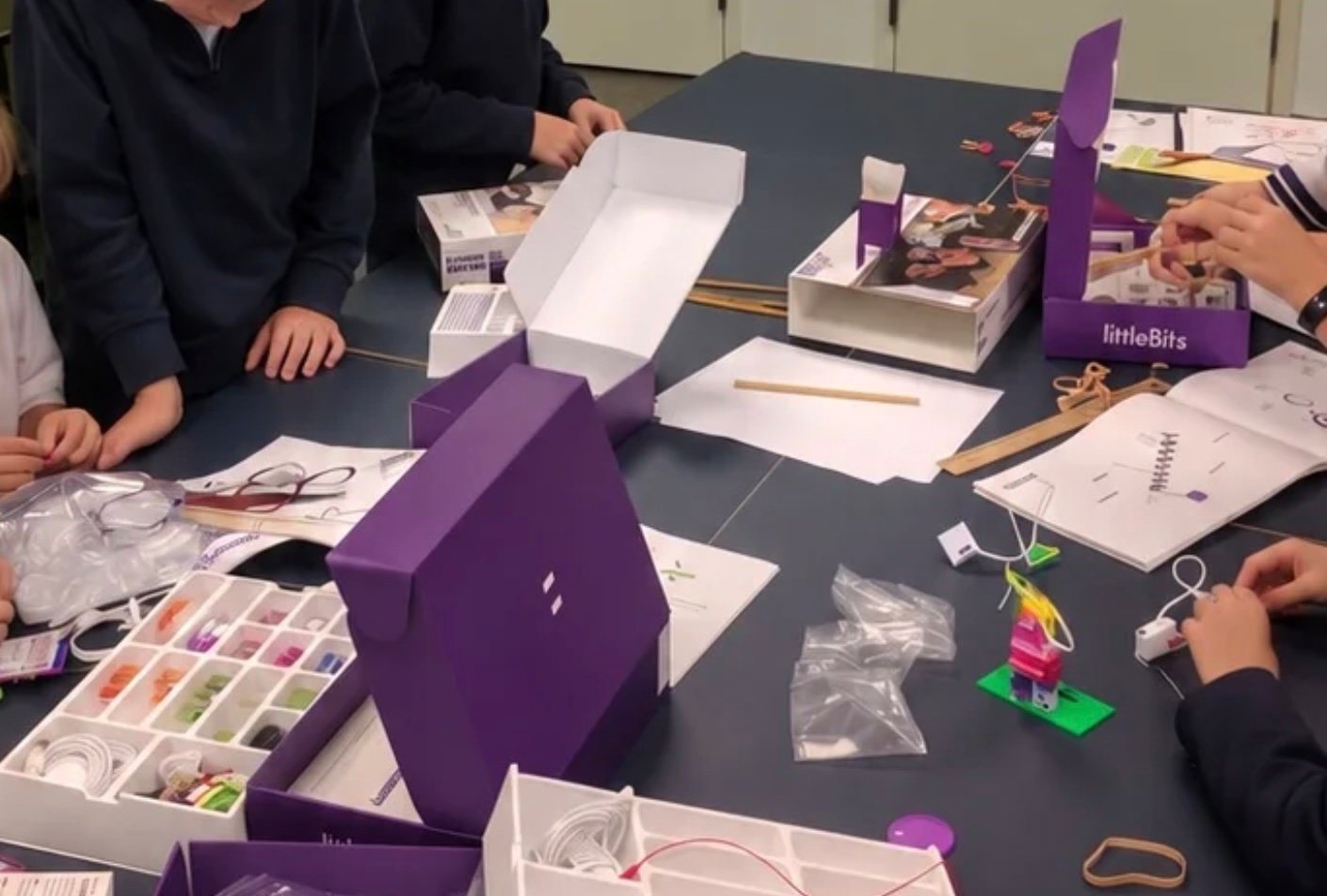
Early in my teaching career I had a huge collection of littleBits electronic parts. The kits had become disorganized from a previous class.
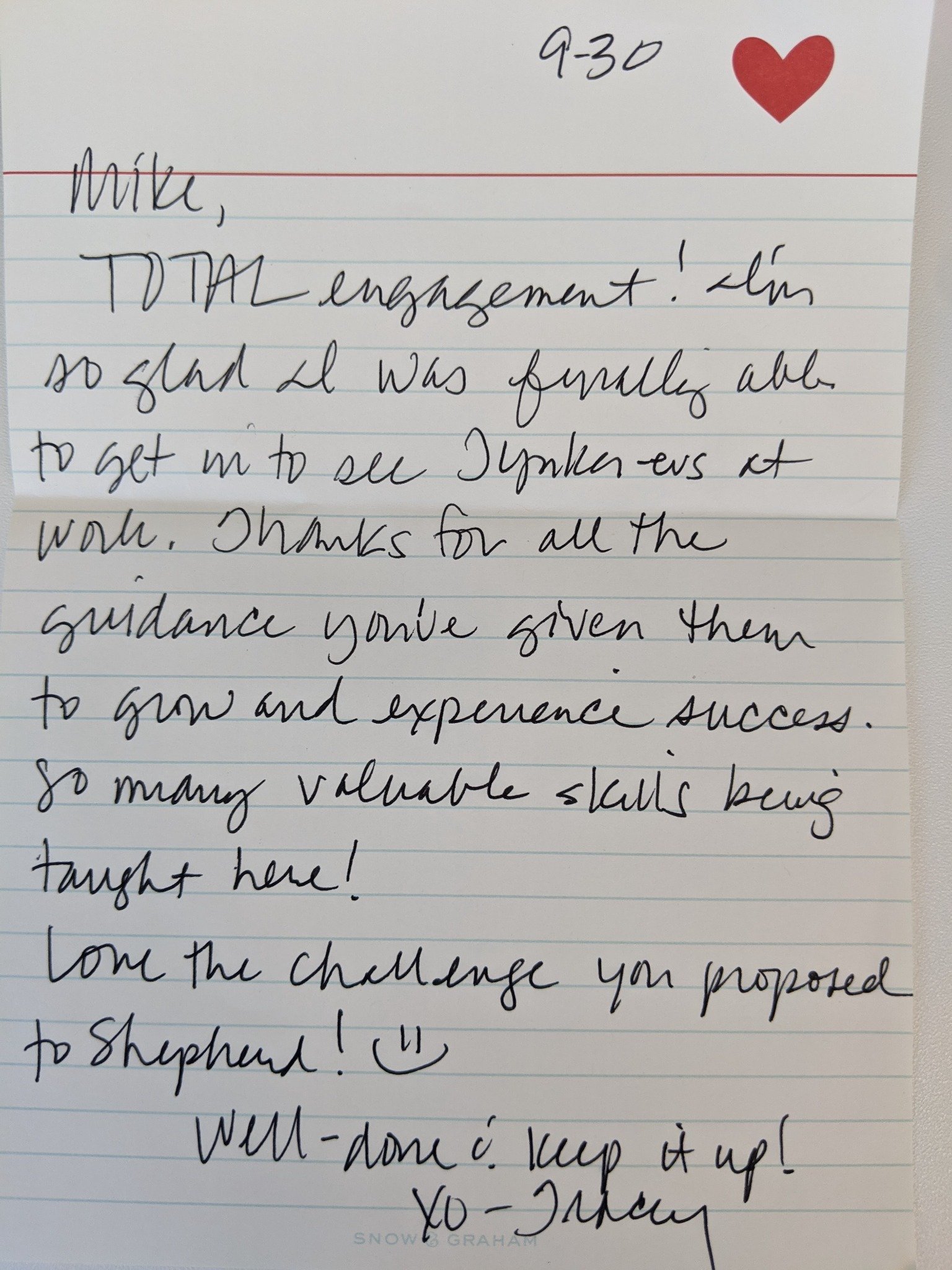
A teacher new to the school brought her class into the Design Center. She was organized, academic, and ran on sequences and rubrics. Before class she asked what the students would do and how I'd grade it. I told her she should stay. If I explained it, it would sound irresponsible.
I told the students what to build. Then I handed them the messy kits. And threw away the manuals.
For a moment, confusion. Then students started testing parts, comparing discoveries, failing, rebuilding, and teaching each other what each piece did. By the end of class every group had a working version, and every one was different. Her expression went from confusion to understanding in about 50 minutes.
It wasn't chaos for its own sake. The room was set up so the students had to discover the system instead of following a recipe.
Process over product.
A polished final object can hide weak thinking. An ugly prototype can reveal excellent thinking. I care more about the path than whether the first result looks impressive.
Open the black box
Technology looks like magic because kids only see the finished screen. I want them inside it: acting out an algorithm, tracing a network, training a learning model with their own hands.
Empathy before engineering
I once turned a circuits lesson into a design challenge: build a working game controller from cardboard, copper tape and a Makey Makey that can be used with one hand. The electronics mattered. So did the person holding it.
Failure is data
I tell students their first five failures are just data points on the way to success. Test early, find the flaw, change one thing, try again. A miss is information, not a verdict.
Make it touchable
Paper structures, marble-powered computers, 3D printing, physical electronics. Some ideas only click once a kid can hold them and argue about them.
Different kids shouldn't need different rooms.
Good differentiation isn't making work easier for one kid and harder for another. A good challenge has an entry point almost anyone can reach and enough depth that an advanced student can keep going.
One student struggled with the technical side of a group project but was an exceptional artist, so I made him the class Art Director, and his role became essential. Another needed far less reading, so I redesigned the whole class with less text rather than singling him out. When an advanced coder raced ahead of everyone, I made him an Assistant Teacher. Explaining it became his next challenge.
The entry point should be accessible. The ceiling should be hard to find.
Technology, teaching, business, and the real world.
Real problems don't arrive labeled "science," "coding," or "engineering." My career didn't stay inside those labels either.
Medical IT and enterprise data centers
Digital medical systems and high-stakes data center operations. Where systematic troubleshooting became a habit.
Mac Genius
Diagnosed and repaired thousands of devices, and translated technical problems into language customers could actually understand.
Cafe owner
Bought a neighborhood cafe, ran it for two years, and sold it. A very different kind of system, with very real consequences.
Private schools
Brookwood School and the Episcopal School of Dallas. Started on the technology side and moved into the classroom: 5 years teaching STEM, design thinking, coding and maker tools, including coordinating ESD's Design Center.
Solar, battery and generator systems
Technical systems at a much bigger physical scale. Same lesson: the tools change, the problem-solving habits don't.
First Cog
A return to the part I enjoyed most: helping kids get confident when they face a problem they don't already know how to solve.

What color is the number 7?
The first instinct is to answer. First Cog teaches kids to ask what the question actually means first.
A programming language is no more computer science than a telescope is astronomy.
The tool isn't the subject
People studied the sky long before telescopes. The telescope made astronomy more powerful, but it didn't create the questions. Computers do the same for problem solving: they run our ideas at enormous speed, but the thinking starts before the machine.
Not everyone needs to be an expert
Most kids will never compete in the Olympics, but exercise still matters. Most won't become programmers either. Reasoning step by step, testing ideas and understanding automated systems is still useful fitness for the mind.
If AI is the only tool you know how to use, every problem starts to look like a prompt.
Sometimes the right answer is AI. Sometimes it's a calculator, a search, an experiment, a few lines of code, a prototype, or a pencil and a piece of paper. Sometimes the best tool is no technology at all. Kids should know enough about the shape of a problem to choose, rather than reaching automatically for the most powerful thing on the desk.
First Cog isn't about knowing every answer.
It's about knowing what to do when you don't.